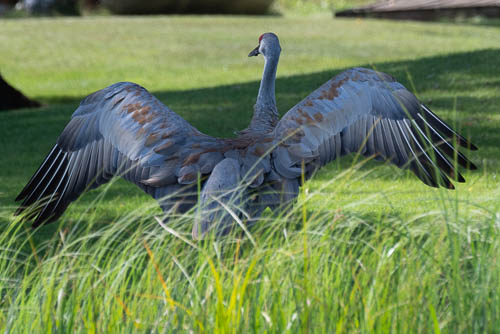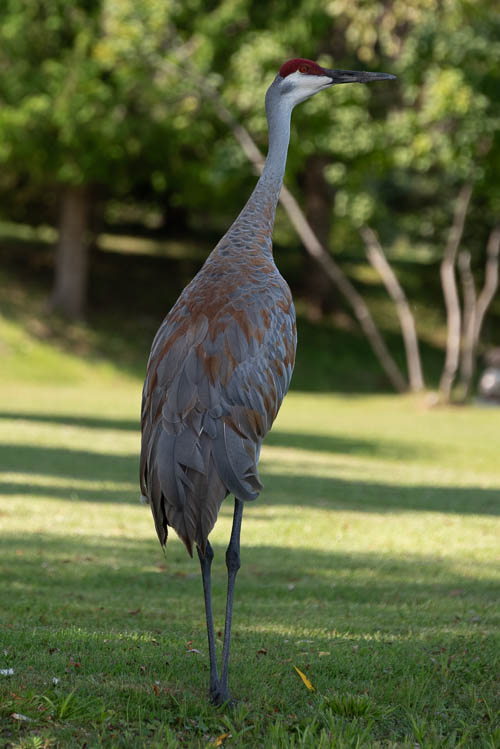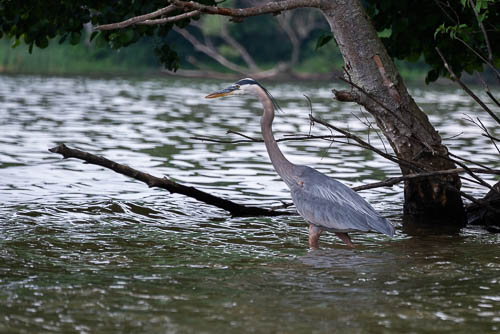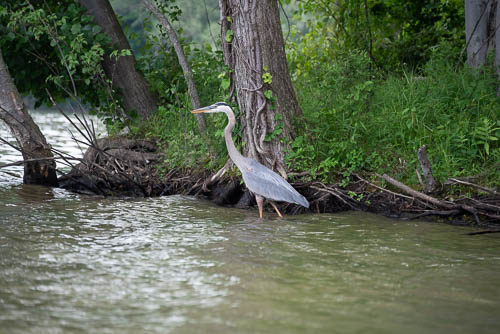
Party-Crashing Egret (Lake Erie, PA)

Places and Their People, History, and Lore


On Labor Day, the Mackinac Bridge Authority in Michigan closes the bridge from 6:30 a.m. – noon. Brave pedestrians walk across the bridge. Jonathan participated the past few years. (A one-way walk, plus all of the extra walking involved for walking from one’s drop-off spot to one’s pick-up spot, ended up being 7 miles for Jonathan.) Last year he crossed the bridge and then crossed back! (I’m so proud of him.)
While Jonathan walked this year, I took the first ferry of the day to Mackinac Island. This is the earliest that I’ve ever been to the island.
Mackinac Island was a sacred spot to the local Native American tribes. It’s now a tourist attraction.
European settlers colonized it. An Astor traded furs here. (Same family as the guy who went down on the Titanic generations later.) The island now hosts two old forts, three cemeteries, many Victorian houses, and the Grand Hotel. (And a Starbucks!)
And horses. Lots and lots of horses. (“HORSE” is pretty much the entire theme of this island.) And bicycles.

Motorized vehicles are banned here except for emergency vehicles. That’s why folks pay the big bucks to come here. Tourists sightsee by bicycle, horse, or walking.

If you’re staying overnight on the island, you either schlep your luggage to your hotel or get it delivered by horse or bicycle. Same with any souvenirs that you buy. Same with the food that you eat. Same with the food that the horses eat. Same with the ingredients used to make the fudge that the tourists buy. (There are a lot of fudge shops on the island.) Same with the alcohol. It’s expensive to consume things and experiences on the island.

My in-laws used to visit as day-trippers every few years. (My husband’s parents used to live in St. Ignace, one of the towns on the mainland where one can park and catch a ferry to the island.) My father-in-law likes to joke around family and friends about the smells of the horse shit mixing with the smells of the fudge.


I’ve never spent the night “on island.” I first came here as a day-tripper 20 years ago this summer. However, this month’s Labor Day trip was my first since before 2020.

I personally find the island stressful when it’s crowded. The island is crowded every day that I ever visited, which are days with nice weather during tourist season. (Funny how that happens!) However, the crowds vary depending on the time of day and the day of the week. The only reason that I was able to take any photos of the “main drag” this year was because I got there as early as I possibly could. I arrived on the same ferry as about a dozen hotel employees. (I am under the impression that they were housekeeping staff who lived on the mainland.)
I wanted to show my blog readers what Mackinac Island looks like in the summer before “all of the rest of us day-tripper tourists” arrive on Labor Day.

So, keep in mind that I took all of these photos within an hour of stepping off of the morning’s first ferry on Labor Day. Don’t expect downtown Mackinac Island to be this empty when you arrive midday for your visit.
Also, the irony is not lost on me that I (as a tourist) witnessed a lot of service and tourism industry employees up bright and early at work on Labor Day.


After I took all of these photos, I booked a rather expensive carriage tour around the island on the first tour of the day. To make a long story short, the carriage ride was in two parts. For the first part, I had a Romanian carriage driver / tour guide. I learned that he was a university student and he was in a program that permitted him to work in the United States for three months each year, and then travel for a fourth month. He is only eligible for this program while he is a student. Next year, he will graduate and he will no longer be eligible for this program. He drove us past the traditional tourist trap staples such as the Grand Hotel and the Grand Hotel’s golf course. Some poor little girl wiped out on her bicycle in front of our carriage while we were at the Grand Hotel. (The roadway there is a steep hill.) She cried. Her parents were there and she got back on her bike. I saw the same little girl walking around on a different part of the island several hours later, so I like to believe that she was fine. It must have been mortifying for her to fall like that in front of a full carriage, though.
Then our Romanian driver / tour guide drove us past the dormitories where many of the service industry employees reside and past the stable where the horses reside.
I learned a lot about horses on both the first and second parts of the carriage tour. I forgot most of it already. I do remember that the Romanian driver / tour guide finds it necessary to rest his horses behind trees and shrubs when he is on the section of roadway that borders the Grand Hotel’s golf course. This is to prevent golf balls from hitting the horses, causing them to bolt. I learned several details about the Romanian guide’s personal life. I learned absolutely nothing about the personal life of the driver / guide that we had for the second part of the tour.
The tour company had a “moderator” who managed our transfer from the first carriage and the first part of the tour, through a building that had a souvenir shop and concession stand, and onto a second carriage for the second part of the tour. I learned that this man lived in St. Ignace. He told us that if he did not go to work on Labor Day, he would otherwise be stuck at home all day due to the traffic backups that result from the closing of the Mackinac Bridge.
After Jonathan walked across the Mackinac Bridge from St. Ignace to Mackinaw City, he took a ferry from the Mackinaw City side to the island. (The two ferry companies offer service from both sides of the bridge.) The ferry that Jonathan rode to the island almost wiped out two small power boats that stopped directly in front of that ferry. Also, a freighter passed in the shipping channel on one side of this whole scene, so the ferry couldn’t swerve in that direction to avoid the power boats. Then Jonathan watched sailboats and other small watercraft leave the island’s marina until I finished my carriage tour. (Jonathan is a boat nerd.)
By then, downtown Mackinac Island had a lot more people out and about. We had lunch at the Pink Pony. We waited almost an hour for our table, but it was okay because we haven’t eaten there since before 2020. Also, we overheard the hostess tell patrons who came in after us that the wait was now one and a half hours. The Pink Pony is one of those places where you have to put your name on a list even to be seated at the bar. Jonathan watched the bartender confiscate bar chairs from “patrons” who stole them from the bar in order to join their friends at a table. (“Fine, I guess we’ll just stand then!” said the now chair-less guests.) A bunch of other patrons wore tee shirts announcing that they completed the bridge walk.

I shopped for overpriced souvenirs. (The souvenirs arrived on the island by ferry. Then I purchased the souvenirs and took them off of the island by ferry.) We returned to St. Ignace on the ferry. By then I had reached my limit with crowds and the smell of horses.
Jonathan confessed that the ferry rides to and from the island contribute significantly to his enjoyment of these trips. I agree. For several years, we brought our bicycles and pedaled around the island’s perimeter. We toured Fort Mackinac once. One year, I toured the Grand Hotel. (The Grand Hotel charges non-guests $10 per adult and $5 per child to walk up on the porch and enter the hotel in order to keep out the “unwashed masses.”) Other years were more low key. Jonathan likes to look at the boats in the marina. For several summers, we visited the island during the Race to Mackinac. This is an annual sailboat race (in July) from Chicago (sponsored by the Chicago Yacht Club) to the Round Island Lighthouse / Channel at Mackinac Island. So, Jonathan sat on the beach at Windermere Point to watch boats cross the finish line for several hours. (I think that Jonathan watched the race while I toured the Grand.)
I read a lot of beach reads about the island of Nantucket off of the coast of Massachusetts by Elin Hilderbrand. I like to think of Mackinac Island as a sort of “Nantucket of the Midwest.” Except with no automobiles. And probably with more horses.

Postscript: Here are some photos that I took of the Mackinac Island Area (Round Island Light House, Mackinac Bridge at Sunset, etc.) several years ago.


I found an article titled “Who Was Alexander Hamilton’s Real Nemesis: Aaron Burr or Albert Gallatin and the Jeffersonians?” by Christopher N. Malagisi, dated August 30, 2018, on the Townhall website. This article referenced the book “Jefferson’s Treasure: How Albert Gallatin Saved the New Nation from Debt,” by Gregory May.
The idolized and fabled Alexander Hamilton served as our first Secretary of the Treasury. Hamilton rival Albert Gallatin served as our fourth Secretary of the Treasury.
Thomas Jefferson was the President of the United States who appointed Gallatin as Secretary of the Treasury. Aaron Burr was elected as Jefferson’s Vice President in the election of 1800. So, these guys all knew each other.
Now, my brain totally shut off about one paragraph into reading about the subject matter. Just as it did when I had to learn about the Federalists and the Whigs and the Jeffersonians in high school. So, I don’t have my own fully-formed opinion about whether Albert Gallatin was Hamilton’s real nemesis. I do think that if Lin-Manuel Miranda had rewritten the Hamilton musical so that it was just a bunch of guys arguing about whether Hamilton or Gallatin made a better Secretary of the Treasury, it would not still be on Broadway.
Albert Gallatin owned an estate in Southeastern Pennsylvania. Gallatin’s first wife, Sophia, is buried on the estate. The National Park Service now runs the estate as Friendship Hill National Historic Site. There is no admission fee to visit.
Part of me wishes that Miranda had at least written Gallatin into his “Hamilton” musical – even in a tiny role – so that Point Marion could use it to lure tourists there.
If you want to sight-see while also social distancing, you may want to check out Friendship Hill. Here is my prior blog post about Friendship Hill.
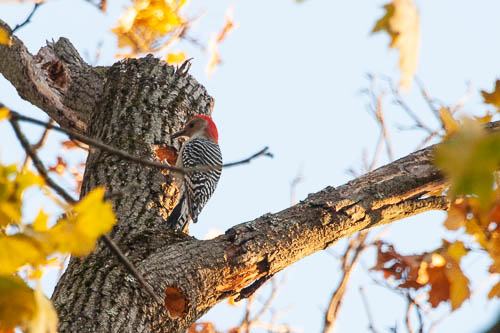
Woodpecker. New Kensington, Westmoreland County, Pennsylvania. November 6, 2020. (Photo: Jenny Gaffron Woytek)
Here is a woodpecker that I saw in my neighborhood this afternoon.
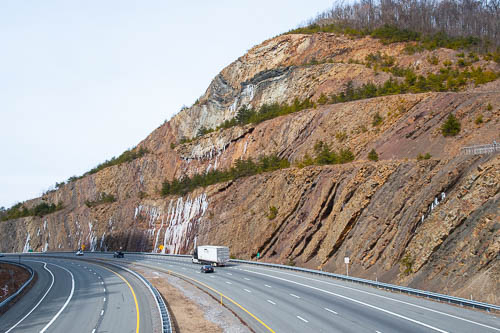
I visit the Flight 93 National Memorial during some trips to my hometown of Berlin, PA. I travel from Berlin to the memorial on a series of back roads. (These roads are a much more direct way for me than the posted route on U.S. 30 / Lincoln Highway.)
On each trip, I pass signs for the Glessner Bridge. Tobias Glessner built this bridge in 1881. The bridge sits on the National Register of Historic Places.
Only five miles separates the Glessner Bridge from the Flight 93 National Memorial.
I visited the bridge last weekend.
If you visit the bridge, be mindful that you will leave the “main drag” of Route 30. You will travel past working farms. Last week, I had to slow down for chickens on the road. I also saw an Amish buggy. In other words, PAY ATTENTION as you drive. STAY OFF OF YOUR PHONE.
(Sidenote: Both my mother and my mother-in-law lived in rural Pennsylvania at points in their lives. Both women told stories of having to stop their cars for cows sitting in the middle of various farm roads. It happens.)
Also, here’s the barn that sits next to the bridge.


To quote Monty Python in “The Life of Brian:”
“What did the Romans ever do for us?“
And here’s the answer: The ancient Romans engineered arch bridges.
You can picnic underneath the pictured stone arch bridge at Tunnelview Historic Site in Western PA (near Saltsburg).
The Pennsylvania Railroad (PRR) built the stone arch bridge in 1907.
This bridge crosses the Conemaugh River on the side of Bow Ridge. This bridge replaced two other bridges and aqueducts at this river crossing. The bridge survived the Johnstown Flood of 1936. The Army Corps of Engineers built the Conemaugh Dam nearby in 1952 for flood control. This stone bridge no longer holds railroad tracks, but it now provides access to the dam’s east side.

The iron bridge that passes over the stone arch bridge IS a currently active railroad bridge. I took the above photo as a freight train carrying crude oil crossed the bridge and also crossed the Conemaugh River. Keep in mind that the Conemaugh feeds the Kiski River. The Kiski feeds the Allegheny River. The Allegheny feeds the Ohio River. The Ohio feeds the Mississippi River. Think about this as you watch a train full of crude oil traverse the Conemaugh.
Both of the bridges at Bow Ridge cross the Conemaugh River downstream from the dam.
If you cross the stone arch bridge to access Bow Ridge, you will see the remains of the Bow Ridge Tunnel. The ghost town of Livermore, Pennsylvania sits beyond this tunnel, on the other side of Bow Ridge. (The government partially flooded Livermore when they built the Conemaugh Dam and created Conemaugh Lake.)

This is very close to the boundary between Indiana County and Westmoreland County. You can reach this by driving through the Conemaugh Lake National Recreation Area, or from the West Penn Trail.
If you access the Tunnelview Historic Site through the entrance to Conemaugh Lake National Recreation Area, you will see this fantastic sign:

Here- at the Tunnelview Historic Site – you will find a small pavilion, primitive restroom, parking lot, and canoe put-in. You will also see remains of the Pennsylvania Mainline Canal. This is where Jonathan and I put-in when we kayaked to Saltsburg twice.
Oh! I have to tell you about the FIRST time Jonathan and I kayaked from here:
We parked here at the Tunnelview Historic Site. We paddled downstream six miles, almost to Saltsburg. We stopped for lunch. It was June, and the current didn’t “seem” all that strong. As per our plan, we set off to paddle upstream back to our car.
Hey, I think that we have been paddling next to that same rock for the past ten minutes. What the – when did the current get that strong?
That’s right – we couldn’t paddle upstream. We portaged our kayaks upriver for a good part of the return trip. We smelled a dead animal rotting in the water. Jonathan didn’t tell me about the snakes that swam past us because snakes scare me. I worried that we wouldn’t get back to our car before the sun set, that we would have to spend the night in the woods, and that somebody would find our car and report us as missing on the river. As I pulled my kayak over the stones on the riverback, I fantasized about the search party that would be sent after us, about our faces all over the news. (We did get back to our car and get the kayaks loaded right before it got dark.)
In hindsight, we should have paddled to Saltsburg, then hired the canoe outfitter in Saltsburg to take us upriver to our car. We talked about doing this when we realized that we couldn’t paddle against the current. Why didn’t we? Because we’re stubborn.
On our second trip, we parked in Saltsburg and let the outfitter drive us to the put-in at the Tunnelview Historic Site. Then we paddled downriver to our car. Much better.
Life is easier when we aren’t stubborn.
Here is the sign that SHOULD have tipped us off that the Conemaugh River’s current “might” be sorta strong at our put-in spot:

Here’s another important sign:

(Here is a close-up of the artist names:)

We haven’t picnicked at Tunnelview or kayaked on the Conemaugh River for a while because we’ve spent so much time this year with the “new” sailboat. However, I really think that you would enjoy your visit to Tunnelview.
As I noted, the remains of the canal and aqueduct at this site were part of the Pennsylvania Mainline Canal, which worked in a system with the Allegheny Portage Railroad. From the 1830’s – 1850’s, this system hauled boats over the Allegheny Mountains. Pennsylvania paid to construct the entire thing. Then, after about only two decades, the system became obsolete! I WILL blog about this on some future day.
(This is a redux from the blog that I created with my husband Jonathan, www.jennyandjonathangetmarried.com. I will shortly pull more of my favorite stories out from the crypt. I want to share more of my favorite moments and places with you fantastic readers.)

1.) Mount Davis is the highest point in Pennsylvania.
2.) The tallest rock shown in the above photo marks Pennsylvania’s true high point. This rock includes a metal plate noting this. In the above photo, my sister K. sits at the very top of this rock.
3.) A 50 foot metal observation tower / fire tower sits a few feet away from this rock that marks the true high point.
Planning Your Trip to Mount Davis:
1.) Mount Davis belongs to Forbes State Forest. Here are the maps from PA DCNR.
2.) Jonathan and I sometimes come up here to escape Pittsburgh-area heat waves. Keep that in mind when you choose clothing for your trip.
3.) You can travel between the High Point and the Mount Davis Picnic Area by car or by foot on a CCC trail. The picnic area includes picnic tables, a pavilion, and a primitive restroom. However, note that there is no place to shop or buy gas on the summit. If you intend to travel south from Meyersdale to Mount Davis, note that Meyersdale is the closest place where you can purchase any of these things.
Watch your speed and watch out for Amish buggies. Be especially careful on Sundays. This area hosts many Amish farms, and the families who live here travel for Sunday worship. The first time that I brought Jonathan to Mount Davis, we missed the sign for our turn-off from Route 219 in our diligence regarding the buggies.
Enjoy your trip!

A few months ago, I blogged about the time that Harry K. Thaw shot Stanford White over White’s relationship with Thaw’s wife, Evelyn Nesbit. (Thaw was from Pittsburgh, and Nesbit was born in Tarentum, PA, although the two of them met in New York City.)
I visited Thaw’s grave in Allegheny Cemetery, Pittsburgh.
I didn’t put the rosary on this grave. I don’t know who put the rosary on the headstone.
Here is the marker for the Thaw family plot:

If you want to hear a podcast or two about Evelyn Nesbit, “The Girl in the Red Velvet Swing,” and Thaw’s murder of White, check out these podcast episodes:
1.) Criminal (hosted by Phoebe Judge), covered this in episode 91, The “It” Girl.
2.) Then, an episode of the podcast My Favorite Murder talked about this in episode 136 and heavily “cited” Criminal. (In my opinion, the bulk of the My Favorite Murder host’s “research” consisted of her listening to the Criminal episode! This is merely my personal opinion, though.)